
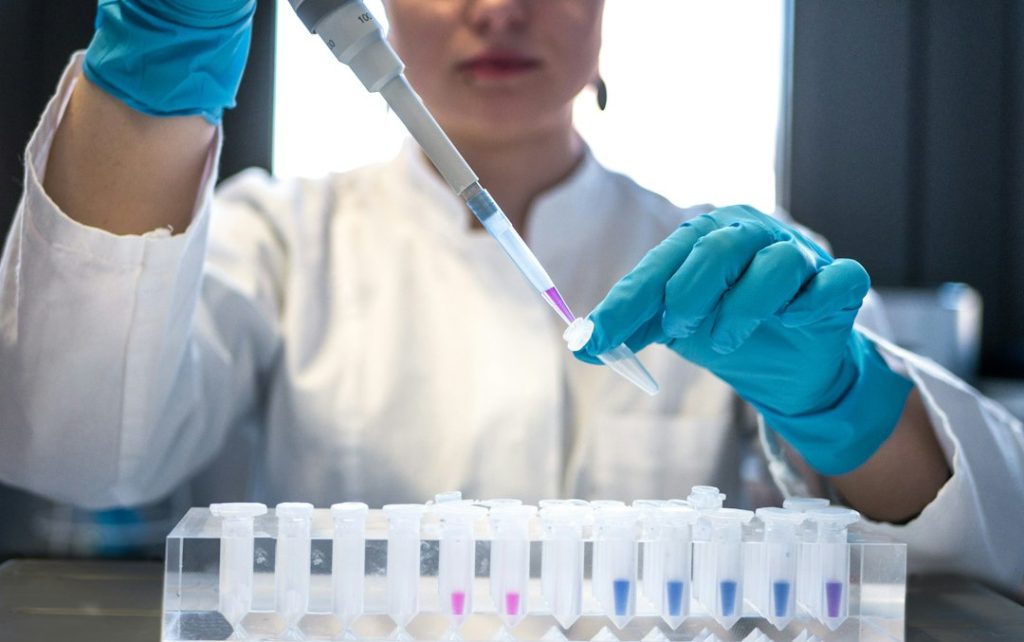
Artificial intelligence, genomics and bioinformatics are changing how researchers study diseases, interpret biological data and explore potential medicines. For biotechnology and life-science students, understanding these connected fields can help build a practical foundation for research and future career opportunities.
What is AI-powered drug discovery?
Drug discovery is the process of identifying and evaluating molecules that may become medicines. Computational methods can help researchers organize biological data, predict molecular properties, prioritize candidate compounds and identify patterns for further laboratory testing. AI supports researchers; it does not replace experimental validation, clinical studies or expert review.
Why genomics and bioinformatics matter
Genomics studies an organism’s complete genetic information. Bioinformatics uses computational tools to store, analyze and interpret biological data. Together, these fields help researchers investigate genes, compare DNA sequences, study variants and explore the molecular basis of disease.
Where NGS sequence analysis fits in
Next-generation sequencing (NGS) produces large volumes of DNA or RNA sequence data. A typical analysis workflow may include quality control, read alignment or assembly, variant calling where appropriate, annotation and biological interpretation. Students should learn data quality, reproducible workflows and responsible handling of research data.
Skills biotechnology students can start learning
- Foundations of molecular biology, genetics and biochemistry
- Python basics for data handling and visualization
- Biological databases and sequence search concepts
- Genomics and NGS workflow fundamentals
- Statistics, data visualization and scientific communication
- Research ethics, data privacy and careful interpretation of results
Beginner-friendly project ideas
Start with a public DNA or protein sequence, document its source, perform a basic sequence comparison, visualize a small dataset, or write a reproducible report explaining a published genomics dataset. For a drug-discovery learning project, use public educational datasets to explore molecular descriptors or compare published compound properties without making medical claims.
Explore biotechnology and bioinformatics learning opportunities
Students who want to explore these topics can visit The Nexora Group’s Biotechnology and Bioinformatics Students page for relevant learning and internship information. Choose projects that match your current skills and always distinguish computational predictions from experimentally confirmed findings.
Conclusion
Drug discovery, genomics, bioinformatics and NGS analysis overlap in modern life-science research. Building strong biology fundamentals, basic programming skills and a small portfolio of well-documented projects can help students understand these areas and prepare for further learning.
Suggested SEO keywords: AI drug discovery, genomics for students, bioinformatics internship, NGS sequence analysis, biotechnology career skills, Python for bioinformatics.