
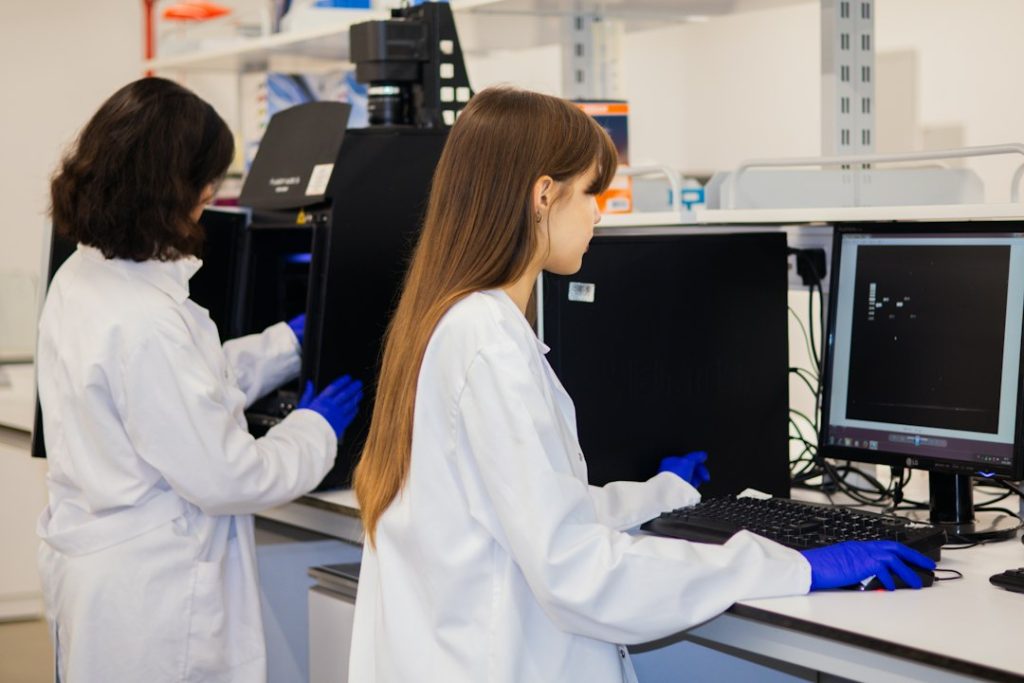
Biotechnology is increasingly connected with data science. Bioinformatics and next-generation sequencing (NGS) help researchers study DNA, RNA, genes and biological variation. For students exploring modern life-science careers, learning the fundamentals of biological data analysis can be a useful starting point.
What Is Bioinformatics?
Bioinformatics combines biology, computing, statistics and data analysis to interpret biological information. It is used in genomics, molecular biology, biomedical research and drug discovery.
Important Skills to Explore
- Biology foundations: DNA, RNA, genes, proteins and genetics.
- Python basics: variables, files, data structures and simple data analysis.
- Sequence analysis: understanding FASTA and FASTQ files and basic sequence quality concepts.
- NGS fundamentals: sequencing workflows, quality control and how researchers interpret results.
- Statistics and visualization: tables, plots and careful interpretation of biological data.
Beginner-Friendly Project Ideas
Students can start with a small, publicly available example dataset: calculate sequence lengths, summarize GC content, visualize sample counts or document a basic quality-control workflow. Use public training datasets and follow the relevant data-use terms. These exercises are educational and should not be presented as clinical results.
Explore Learning Resources
Visit The Nexora Group Biotechnology and Bioinformatics student resources to explore relevant learning and internship information.
You may also explore the Python for Bioinformatics Internship, Bioinformatics and NGS Sequence Analysis with AI Internship, and Computational Biology Internship Program.
Build Your Foundation Step by Step
Start with biology fundamentals, practice basic coding, learn how to handle sample datasets and explain your results clearly. A portfolio of well-documented learning projects can help you demonstrate your skills to educators and potential internship providers.
Image credit: research laboratory image via Unsplash.