
Bioinformatics, Next-Generation Sequencing (NGS), genomics and computational biology are important areas of modern biotechnology. These fields combine biology, statistics and computing to help researchers understand biological data, investigate diseases and support scientific discovery.
What Is Bioinformatics?
Bioinformatics uses computational methods to organize, analyze and interpret biological information such as DNA, RNA and protein sequences. Students can begin by learning biology fundamentals, statistics, Python and basic data visualization.
Understanding NGS and Genomics
Next-Generation Sequencing technologies generate large amounts of DNA or RNA sequence data. Genomics studies the complete genetic material of organisms, while NGS analysis workflows may include quality control, alignment, variant analysis and interpretation. The correct workflow depends on the experiment and research question.
Computational Biology and Biological Data
Computational biology applies mathematical and computational techniques to biological questions. It can support sequence comparison, molecular modeling, gene-expression analysis and the interpretation of complex datasets. Good practice includes documenting methods, checking data quality and explaining limitations.
AI and Drug Discovery
Artificial intelligence can help researchers prioritize drug targets, analyze molecular features and explore candidate compounds. AI predictions are not proof of effectiveness or safety; laboratory experiments, expert review and appropriate regulatory evaluation remain essential.
Skills and Beginner Project Ideas
- Learn Python basics and work with simple biological datasets.
- Explore public DNA or protein sequences.
- Practice visualizing gene-expression data.
- Study introductory NGS quality-control concepts.
- Compare sequences using established educational tools.
- Summarize a public genomics dataset and clearly explain its limitations.
Explore Biotechnology and Bioinformatics Learning
Visit The Nexora Group’s biotechnology and bioinformatics student page to explore learning opportunities. You can also read our guides on bioinformatics and NGS data analysis and AI in drug discovery and genomics.
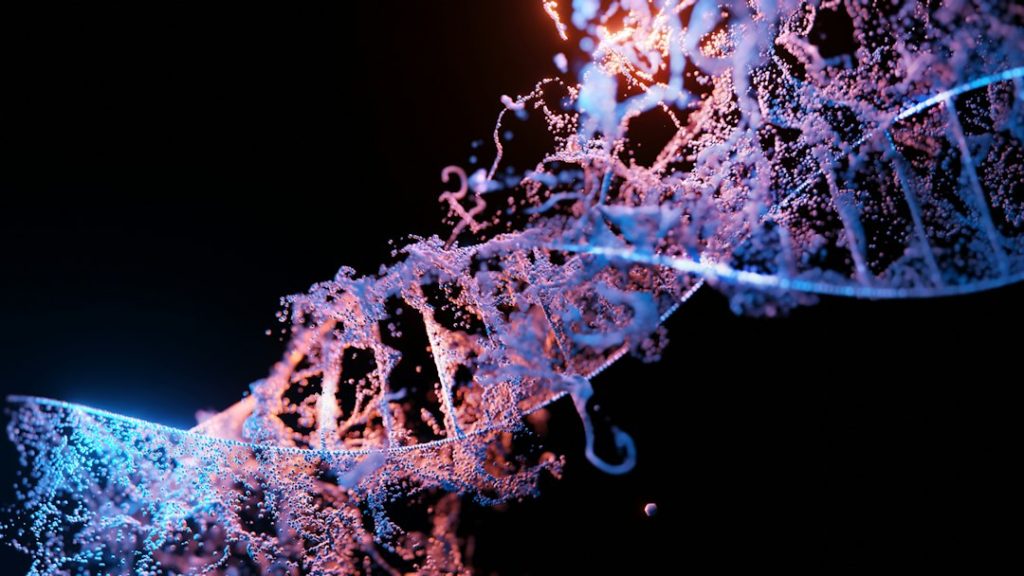
Featured image: scientific molecular structure, photo by Sangharsh Lohakare via Unsplash.