
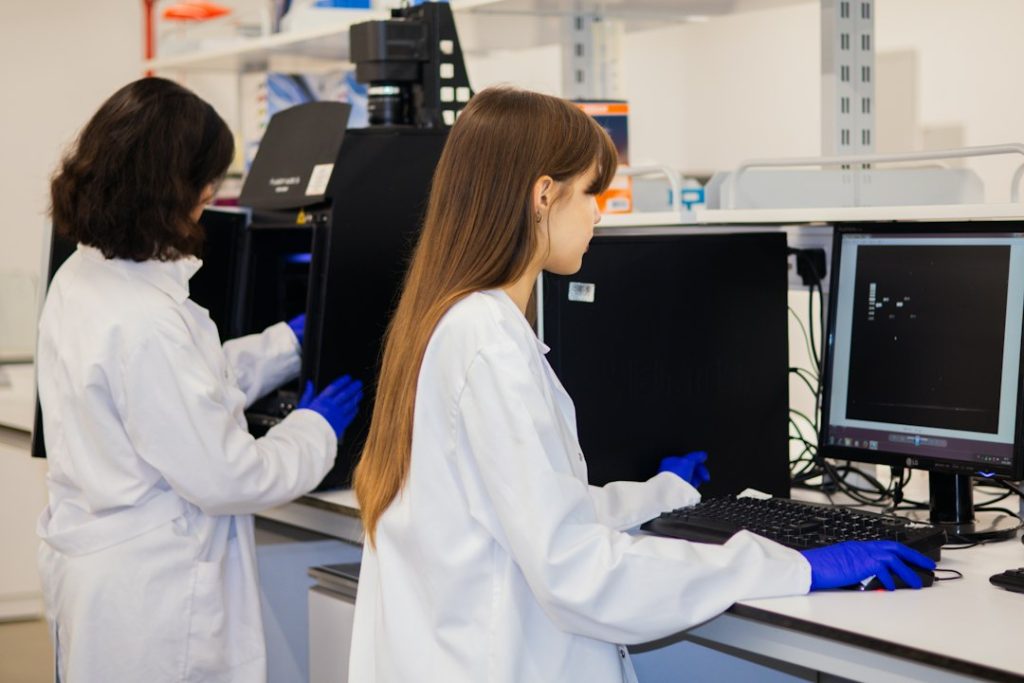
Drug discovery, genomics and bioinformatics are increasingly connected in modern biotechnology research. Artificial intelligence can help researchers explore large datasets, while genomics and bioinformatics provide tools for studying genes, biological pathways and molecular data. Students can build a foundation by learning core biology alongside data analysis skills.
How AI is used in drug discovery
AI and computational methods can help organize research data, predict selected molecular properties, prioritize candidate compounds and identify patterns that researchers may investigate further. These methods support scientific decision-making but do not replace laboratory validation, clinical trials or expert review.
Why genomics matters
Genomics examines the complete genetic information of an organism. Researchers use genomic data to investigate variation, gene function and possible links between genetic differences and biological traits or disease. Interpretation depends on the quality of the data, the study design and appropriate validation.
Bioinformatics and NGS sequence analysis
Bioinformatics applies computational methods to biological information. Next-generation sequencing (NGS) can produce large volumes of DNA or RNA reads. Common analysis stages include quality control, sequence alignment or assembly, variant analysis where relevant, annotation, visualization and interpretation.
Skills students can develop
- Molecular biology, genetics and biochemistry fundamentals
- Python basics for data handling and visualization
- Biological databases and sequence comparison
- Genomics and NGS workflow concepts
- Basic statistics and scientific communication
- Reproducible analysis, research ethics and responsible data use
Beginner project ideas
Try a small project using public educational data: compare two DNA or protein sequences, summarize a published genomics dataset, visualize gene-expression data or write a reproducible report that explains an analysis workflow. For a computational drug-discovery exercise, explore a published dataset and clearly describe the limits of any prediction.
Explore learning opportunities
Visit The Nexora Group Biotechnology and Bioinformatics Students page to explore relevant learning and internship information. You can also read about Drug Discovery using AI and Machine Learning and Bioinformatics and NGS Sequence Analysis with AI.
Conclusion
AI drug discovery, genomics and bioinformatics are complementary areas. Students can get started by strengthening biology fundamentals, learning basic programming, practicing with public datasets and documenting each project clearly. Computational results should always be interpreted carefully and distinguished from experimentally confirmed findings.
SEO keywords: AI drug discovery, genomics for students, bioinformatics, NGS sequence analysis, biotechnology student skills, Python for bioinformatics.